
Physical AI is on patrol tonight.
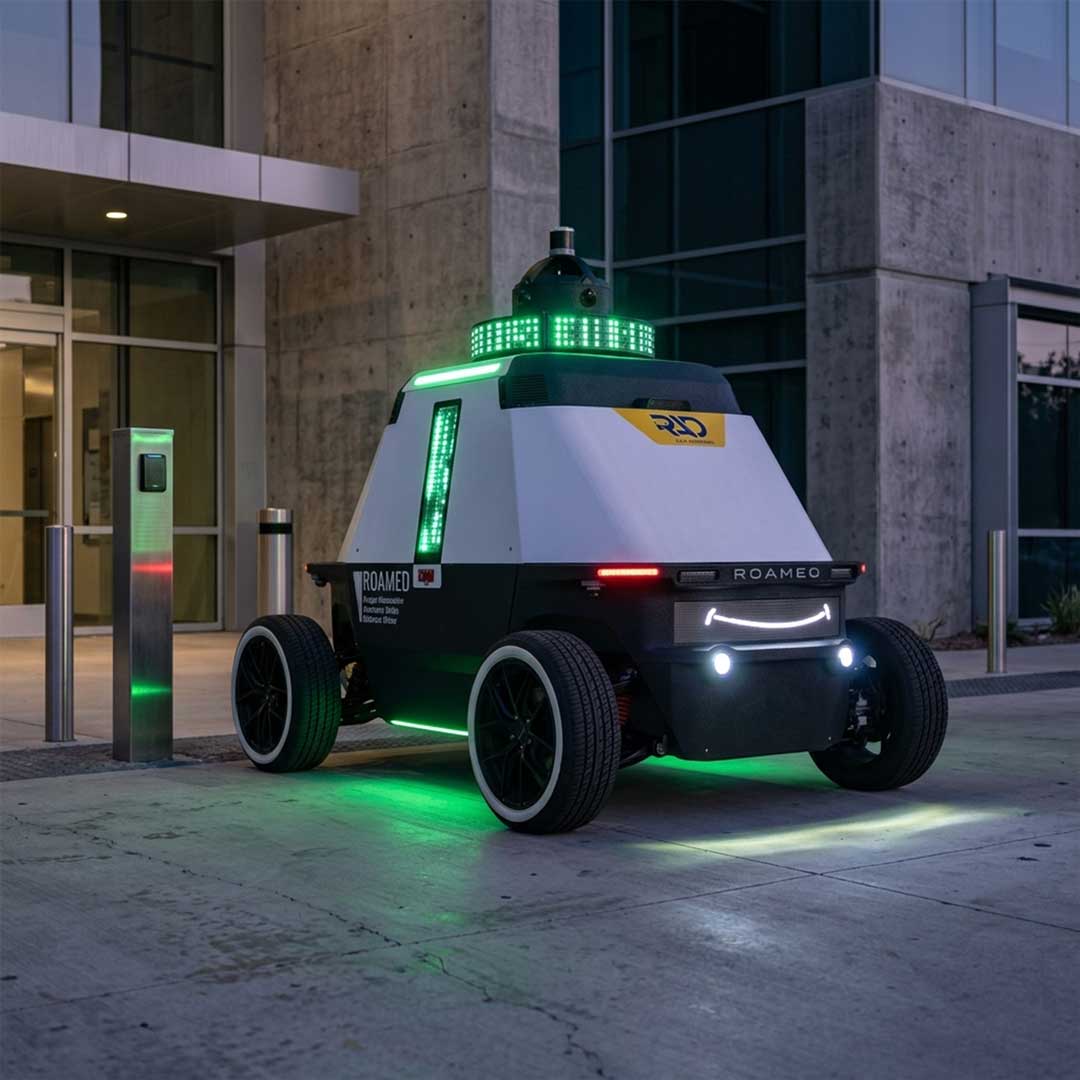
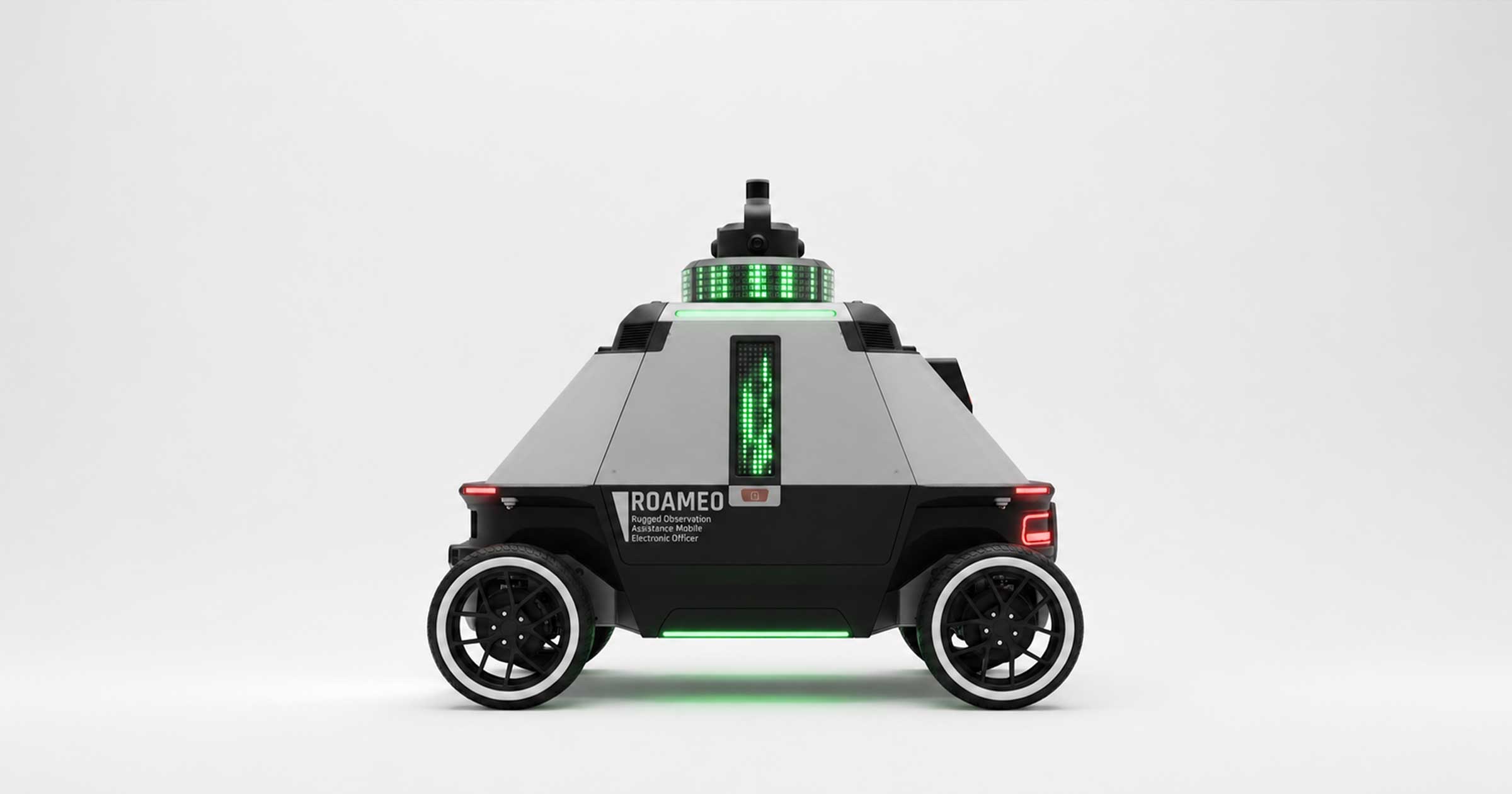
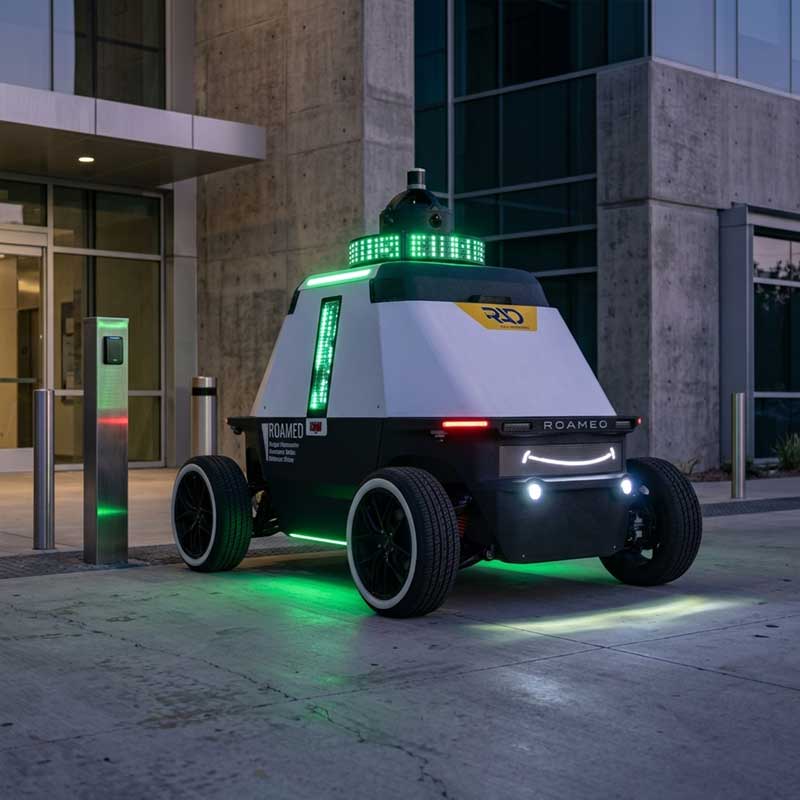
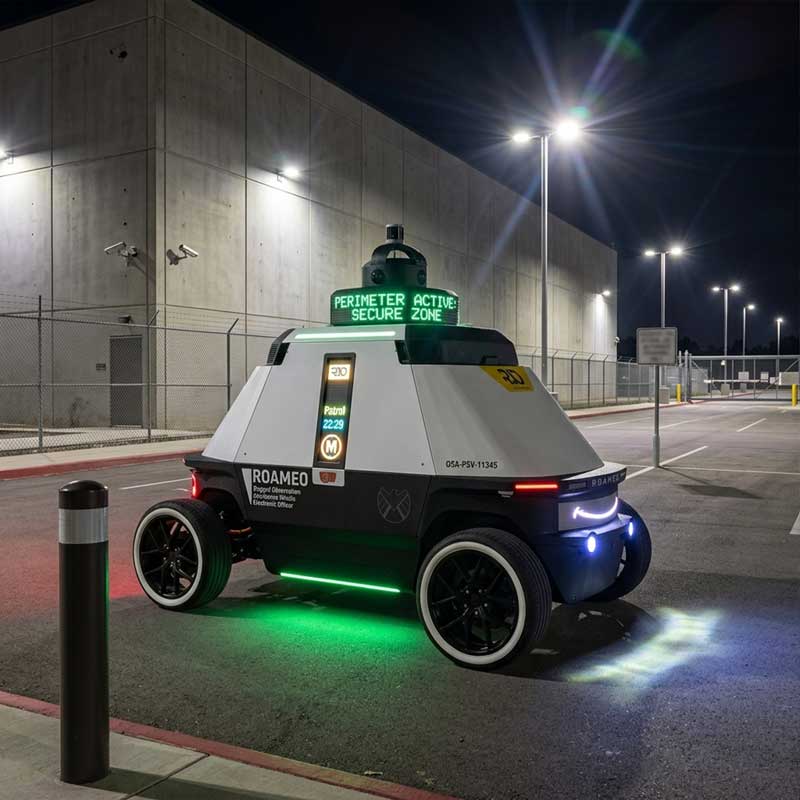
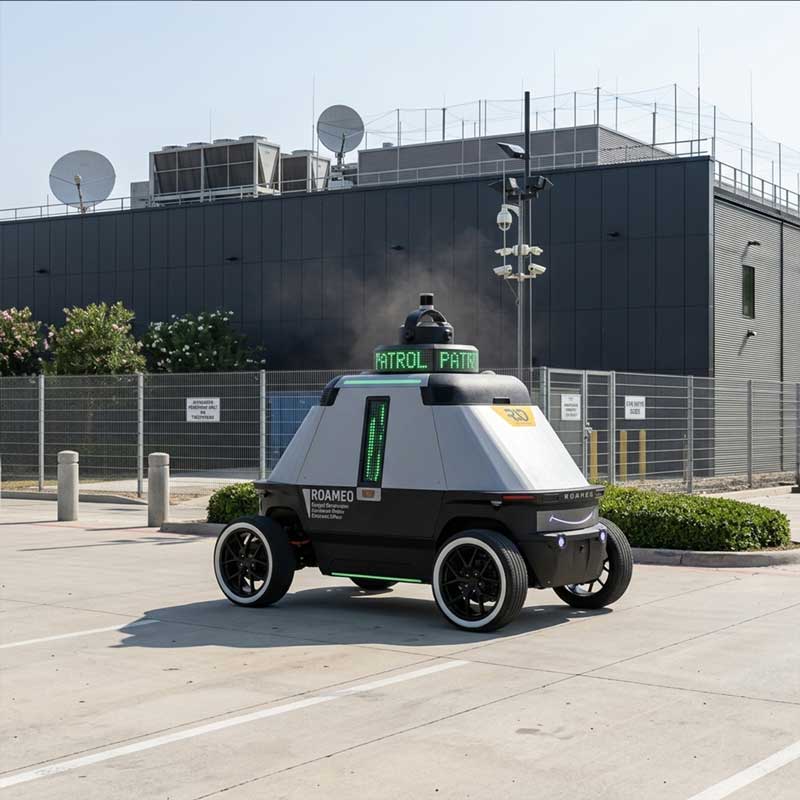
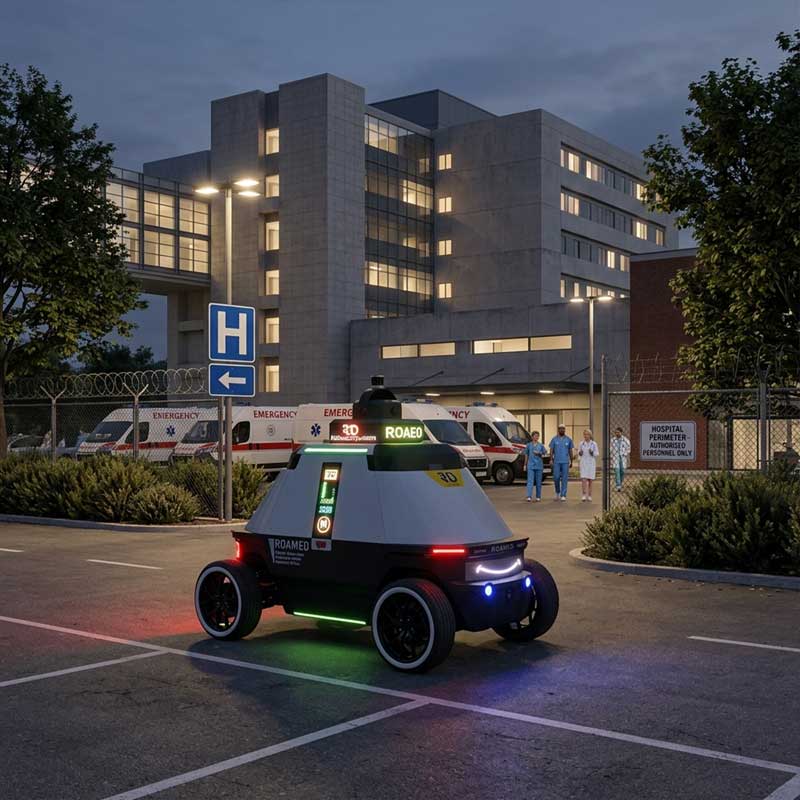
ROAMEO is an autonomous security patrol vehicle, delivered as a monthly service. It patrols 24/7, detects intrusions, loitering, vehicles, and firearms, and its built-in AI, SARA, carries every incident from verification to a documented close. No driver. No guard shift.
Human-driven operations are broken.
Across large sites the operating model has not changed in decades. People walk routes, watch monitors, and fill shifts. It costs more every year and leaves most of the site uncovered between rounds.
Of enterprise facilities face critical labor shortages
Monthly cost of round-the-clock onsite labor, three to five people per site
Annual front-line operations turnover rate, industry-wide
Scaling labor is not a solution.
- Human error and fatigue raise operational risk on every shift.
- Wages, benefits, and overtime keep climbing with no structural fix.
- Turnover above 35% a year
means staffing never catches up. - Adding people costs more without better coverage, consistency, or real-time visibility
The shift to autonomy.
Every operation moves through the same three stages. Only the third one fixes the math.
RAD-M is built to run fully autonomously.
Not a concept.
A fleet in the field.
ROAMEO is deployed, billing, and on patrol under commercial service agreements right now. Thousands of field-tested hours back the drive train and navigation stack, proven on enterprise sites from Detroit to Las Vegas. This is a product you can order, not a roadmap.
Field-tested hours in the drive train and navigation
Patrol coverage on a charge,
then it docks itself
Awareness from fused LiDAR,
radar, and vision
Two things make a security robot autonomous. RAD-M owns both.
One system covers the ground. The other decides what to do about what it sees. Most robots have the first. ROAMEO runs both.
The robot covers the ground.
The agent closes the loop.
A trillion-dollar shift started. Under 15% of it has moved.
Enterprises spend more than a trillion dollars a year running and securing physical operations. Most still rides on human shifts that cost more every year and cover less ground. The move to autonomous operations is early, and RAD•M is already operating while most of the market is still writing the budget.
Annual enterprise spend on physical operations and security
Of that base has shifted to autonomous operations so far
Annual growth pulling demand toward automation
Where ROAMEO
goes to work.
One platform and one operational layer, across the sites that run around the clock.

One robot. About the cost of one shift.
It works all of them.
Round-the-clock human coverage means three to five hires per site, plus benefits, overtime, turnover, and sick days. ROAMEO runs as a service with no equipment to buy and deploys in days, not hiring cycles.
Put physical AI on your operation.
Deployments are live and scaling. Tell us the site and we will tell you what ROAMEO covers, what it costs, and how fast it rolls out.
Request Deployment